Tension-Type Headache (TTH / Stress & Pericranial Myofascial Headache)
An authoritative clinical and educational profile of Tension-Type Headache (TTH), covering pericranial myofascial nociception, central sensitization of spinal trigeminal neurons, bilateral non-pulsatile band-like pressure, constitutional homeopathic supportive management, and emergency red flags for subarachnoid hemorrhage (thunderclap headache), bacterial meningitis, acute angle-closure glaucoma, and giant cell arteritis.
Editorial review complete
Independent clinical validation is pending.
Quick Reference Facts
"The absence of nausea, vomiting, and aggravation from routine physical activity clearly distinguishes tension-type headache from migraine."
Visual guide
 Homeo Healthcare
 Homeo Healthcare
 Homeo Healthcare
In simple words
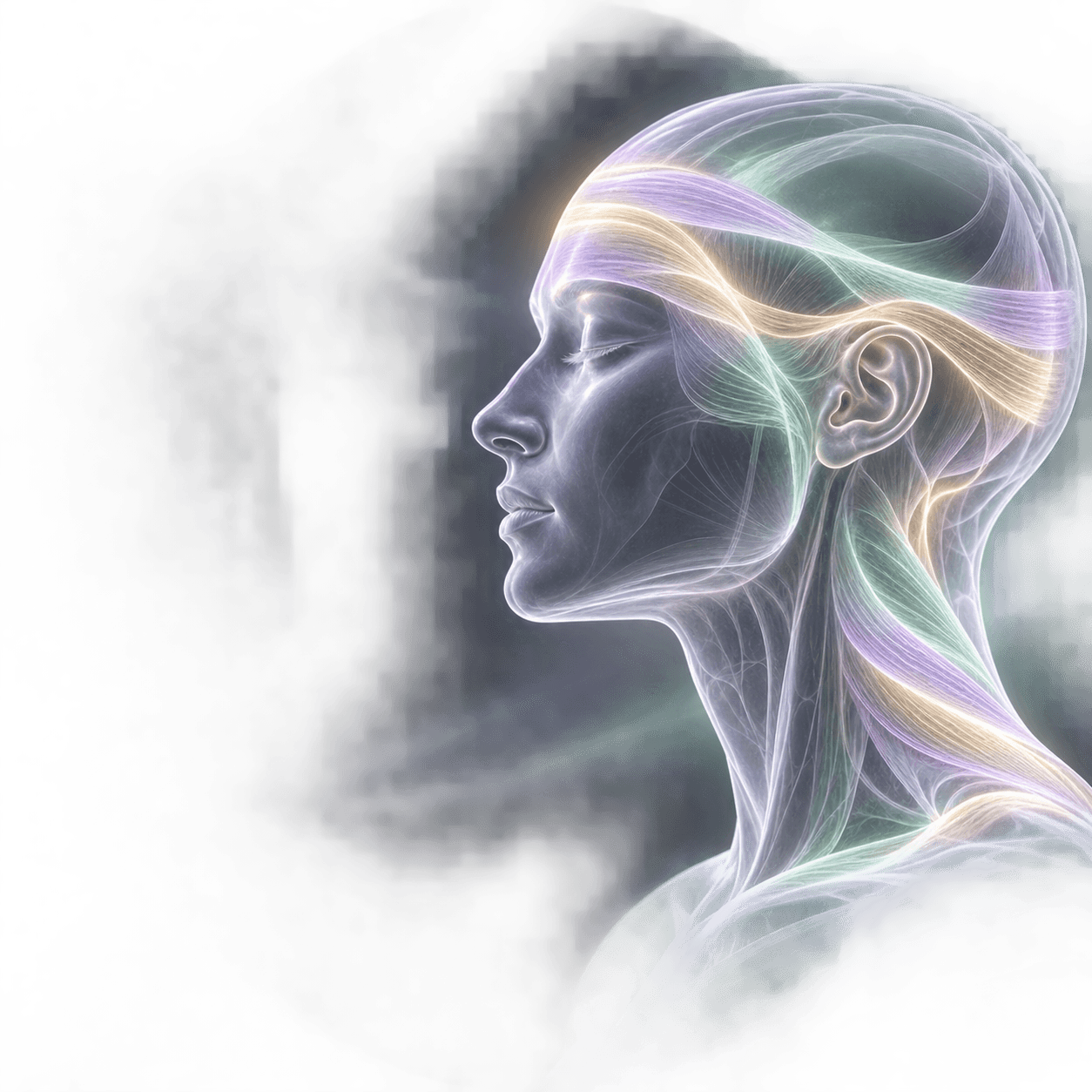
Tension-Type Headache (TTH) is the most prevalent primary headache disorder worldwide, affecting up to 70% to 80% of the global population at some point in their lives. Classified by the International Classification of Headache Disorders (ICHD-3) into infrequent episodic, frequent episodic, and chronic forms, it is characterized by recurrent bilateral, non-pulsatile, dull, aching, pressing, or tightening pain of mild to moderate intensity, classically described by patients as a 'tight vice, rubber band, or heavy helmet squeezing around the forehead and temples'. Driven by increased pericranial myofascial sensitivity and secondary central pain sensitization within the trigeminal spinal nucleus, TTH is notably distinct from migraine by the absence of severe throbbing, absence of vomiting, and lack of aggravation from routine physical activity.
A primary headache disorder defined by the ICHD-3 criteria as recurrent episodes of bilateral, non-pulsatile, pressing/tightening headache of mild-to-moderate intensity lasting 30 minutes to 7 days, unaccompanied by nausea or vomiting, and not aggravated by routine physical activity.
Common causes
- Pericranial myofascial nociception: sustained involuntary isometric contraction, ischemia, and localized release of inflammatory algogenic substances (substance P, bradykinin, CGRP) within the muscles and tendon insertions of the head, neck, and shoulders (frontalis, temporalis, masseter, trapezius, splenius capitis)
- Central pain sensitization: prolonged nociceptive input from tender pericranial muscles causes neuroplastic hyperexcitability of second-order neurons in the trigeminal spinal nucleus (caudalis) and impaired descending pain inhibitory pathways in the brainstem
- Psychosocial stress and emotional strain: chronic mental stress activates the hypothalamic-pituitary-adrenal (HPA) axis and sympathetic nervous system, lowering pain thresholds
- Poor ergonomics and musculoskeletal strain: prolonged forward-head posture ('tech neck') during computer or smartphone use, cervical spine misalignment, and temporomandibular joint (TMJ) clenching/bruxism
- Sleep deprivation, irregular meals, dehydration, and ocular refractive fatigue
Risk Factors
- High psychological stress, occupational burnout, anxiety, and depressive disorders
- Female gender (slightly higher prevalence in women, ratio 1.2:1 to 1.5:1)
- Prolonged sedentary desk work with poor cervical ergonomics and forward head tilt
- Nocturnal teeth grinding (bruxism) or jaw clenching (TMJ dysfunction)
- Medication Overuse: frequent use of over-the-counter analgesics (>10–15 days per month) transforming episodic TTH into chronic daily Medication Overuse Headache (MOH)
Common symptoms
- Bilateral, symmetric, continuous pain distributed across the frontal, temporal, parietal, or occipital regions of the head
- Quality of pain: dull, pressing, tightening, non-pulsatile ache ('tight vice, headband, or heavy weight pressing on top of the head')
- Mild to moderate intensity: typically does not prevent patients from performing normal daily activities, though it impairs productivity
- Duration: lasting from 30 minutes up to several continuous days (in episodic TTH) or unremitting for months (in chronic TTH)
- Palpation tenderness: prominent manual tenderness on palpating pericranial muscles (temporalis, masseter, trapezius, suboccipital insertions)
- Absence of cardinal migraine features: no vomiting, no severe unilateral pulsating throbbing, and either photophobia OR phonophobia may be present, but NOT both
Clinical Red Flags
Seek urgent medical attention at an emergency department or primary care clinic if you present with any of the following symptoms:
- Thunderclap Headache: sudden, explosive headache reaching maximum, 10/10 agonizing intensity within 60 seconds ('worst headache of life'; indicates acute Subarachnoid Hemorrhage requiring immediate emergency non-contrast CT head and lumbar puncture)
- Bacterial Meningitis: severe headache accompanied by high spiking fever, neck stiffness (nuchal rigidity), photophobia, purpuric rash, or confusion (medical emergency requiring immediate blood cultures and IV antibiotics)
- Giant Cell Arteritis (Temporal Arteritis): new-onset headache in an individual over 50 years old, accompanied by scalp tenderness, jaw claudication on chewing, elevated ESR (>50 mm/hr), or sudden visual loss (requires immediate emergency high-dose corticosteroids to prevent permanent blindness)
- Acute Angle-Closure Glaucoma: severe unilateral frontal/orbital headache accompanied by a red eye, cloudy cornea, fixed mid-dilated pupil, seeing colored halos around lights, and intense nausea (ophthalmologic emergency)
- Elevated Intracranial Pressure (ICP): headache that is worst upon waking in the morning, accompanied by projectile vomiting without nausea, worsening with coughing or bending forward, papilledema on fundoscopy, or new focal neurological deficits
Lifestyle & diet support
Optimize workstation ergonomics (ensure computer monitors are at eye level to prevent forward head posture), take 2-minute posture-reset breaks every hour of desk work, practice progressive muscle relaxation or mindfulness meditation, apply a warm compress to the neck and shoulders, maintain regular sleep schedules and meal times, stay well hydrated (drink 2–2.5 liters of water daily), and keep a detailed headache diary to identify personal stress triggers.
Treatment Approaches
Conventional Management
A combined approach encompassing acute rescue relief, preventive pharmacotherapy, and behavioral lifestyle interventions: (1) Acute treatment: simple analgesics (acetaminophen / paracetamol 1000 mg, ibuprofen 400 mg, naproxen 500 mg, or aspirin) taken early in the attack. Combination analgesics containing caffeine are effective but carry high risk of Medication Overuse Headache (limit acute medication use to <2 days per week / <10 days per month). (2) Preventive prophylactic pharmacotherapy (indicated for chronic or frequent episodic TTH with significant disability): low-dose Tricyclic Antidepressants (Amitriptyline 10–50 mg at bedtime is the undisputed first-line evidence-based preventive agent; nortriptyline or mirtazapine as alternatives). (3) Non-pharmacological therapies: Cognitive Behavioral Therapy (CBT), electromyographic (EMG) biofeedback, physical therapy (cervical and postural muscle stretching/strengthening), acupuncture, and trigger point dry needling.
Homeopathic Approach
Homeopathic constitutional and tension-relieving remedies (such as Gelsemium Sempervirens, Bryonia Alba, Belladonna, Nux Vomica, Kali Phosphoricum, Cimicifuga Racemosa, Natrum Muriaticum, Silicea, Spigelia, Ignatia Amara) serve as supportive care to ease pericranial muscle tightness, soothe stress hyperarousal, and support vitality alongside ergonomic adjustments, stress reduction, and headache diary tracking.
Frequently Asked Questions
Clinical & academic detailShow detailHide detail
Diagnosis & tests
Investigation Protocol
Diagnosed clinically strictly using the ICHD-3 diagnostic criteria: requiring (1) at least 10 episodes occurring on <1 day/month (infrequent), 1–14 days/month (frequent), or ≥15 days/month for >3 months (chronic), (2) lasting 30 minutes to 7 days, (3) possessing ≥2 of: bilateral location, pressing/tightening quality, mild/moderate intensity, not aggravated by routine walking/climbing stairs, and (4) no nausea/vomiting and no more than one of photophobia or phonophobia. Neuroimaging (MRI / CT Brain) is NOT indicated in typical presentations with a normal neurological exam, but is mandatory when red flag features (SNOOP mnemonic) are identified.
Differential Diagnosis
Differentiate Tension-Type Headache from Migraine without Aura (unilateral, pulsating, moderate-to-severe, aggravated by physical activity, accompanied by nausea/vomiting and both photophobia/phonophobia), Medication Overuse Headache (MOH), Cervicogenic Headache (unilateral pain arising from cervical spine structures with neck motion limitation), Temporomandibular Joint Disorder (TMJD), Giant Cell Arteritis (elderly, temporal artery tenderness, elevated ESR), Chronic Sinusitis, and Secondary Structural Intracranial Lesions.
Differential Diagnosis Matrix
Differentiate Tension-Type Headache from Migraine without Aura (unilateral, pulsating, moderate-to-severe, aggravated by physical activity, accompanied by nausea/vomiting and both photophobia/phonophobia), Medication Overuse Headache (MOH), Cervicogenic Headache (unilateral pain arising from cervical spine structures with neck motion limitation), Temporomandibular Joint Disorder (TMJD), Giant Cell Arteritis (elderly, temporal artery tenderness, elevated ESR), Chronic Sinusitis, and Secondary Structural Intracranial Lesions.
Reference Citations & Evidence Sources
Classical Homeopathic Literature
- CIT-0007Hahnemann S.. "The Chronic Diseases: Their Peculiar Nature and Their Homoeopathic Cure." Adolph Arnold (1828).
Materia Medica & Keynotes
- CIT-0004Hahnemann S.. "Materia Medica Pura." Adolph Arnold (1811).
- CIT-0005Kent J. T.. "Lectures on Homoeopathic Materia Medica." Boericke & Tafel (1905).
- CIT-0006Boericke W.. "Pocket Manual of Homoeopathic Materia Medica." Boericke & Runyon (1901).
Clinical Reviews & Textbooks
- CIT-0023National Center for Complementary and Integrative Health. "Homeopathy: What You Need To Know." National Institutes of Health (2021).
Clinical Connections
Related Symptoms
Related Remedies
Seeking Expert Consultation?
Book an online video session with Dr. Narayan Jethwani to get an individualized constitutional homeopathic protocol tailored to your case.
Medical Safety Disclaimer
All content on the Homeo Healthcare platform is strictly for educational purposes and is not personal medical advice, diagnosis, or treatment. Homeopathic remedy considerations are provided for clinician review or require individualized consultation with a qualified physician. Never delay seeking professional medical advice or emergency medical care due to content you have read on this website.